
“What fascinates me most about history is how it helps make sense of the present.”
B. Newsome
In the fall of 2024, I had the opportunity to join the eight-day Civil Rights Trail program with the educational travel organization Road Scholar, which made over twenty stops along the U.S. Civil Rights Trail, starting in Atlanta, Georgia and ending in Birmingham, Alabama.
Having practiced civil and women’s rights law for over ten years, I developed a profound appreciation for what it takes to design strategies, create laws, and change institutions to bring about justice and equal rights. Visiting the Civil Rights Trail gave me hope that, despite what is coming around the corner, African Americans will find a way to keep — and if necessary, resurrect — those rights, thanks to the carefully charted and curated course of the Civil Rights Trail.
Having considered myself well-versed in African American and African history, my time on the Trail taught me how little I actually knew about the Civil Rights Movement. In my mind, the Movement had been a big, amorphous, disparate series of events in the 1950s and ’60s that resulted in creating laws that protected the civil rights of African Americans.
On my journey of learning and discovery along the Civil Rights Trail the timeline and pieces of the Civil Rights Movement puzzle started to fall in place and I also found a connection to my own family history.
I was a solo traveler and one of only two black Road Scholar participants in a group of twenty-five, yet I felt completely comfortable with the other travelers; it was easy to meet people and share the deeper meaning of what we saw along the way. The Road Scholar attendees were open-minded, empathetic, and there to educate themselves, just like me. We traveled by luxury bus that was spacious and comfortable. The accommodations and restaurants were exceptional, and when possible, arrangements were made to dine at Black and/or local owned restaurants.
Our First Day – Atlanta
A comprehensive orientation by two Atlanta-based Black historians laid the illuminating and captivating groundwork for the trip. Our tour started with a visit to Martin Luther King, Jr. National Historic Park, which included his birthplace, his grave, The King Center, The Walk of Fame, the World Peace Rose Garden, Ebenezer Baptist Church, and the MLK Visitor’s Center. We also visited the National Center for Civil and Human Rights and the Carter Center. This first leg of the tour was riveting and extremely well organized.
Montgomery
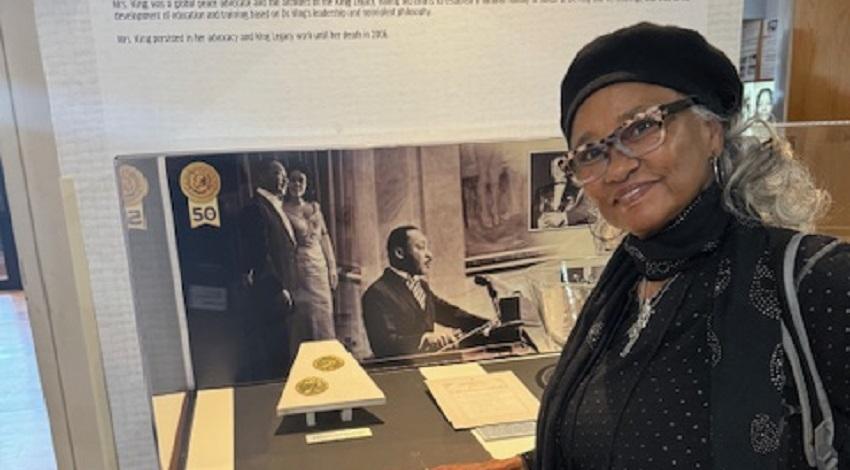
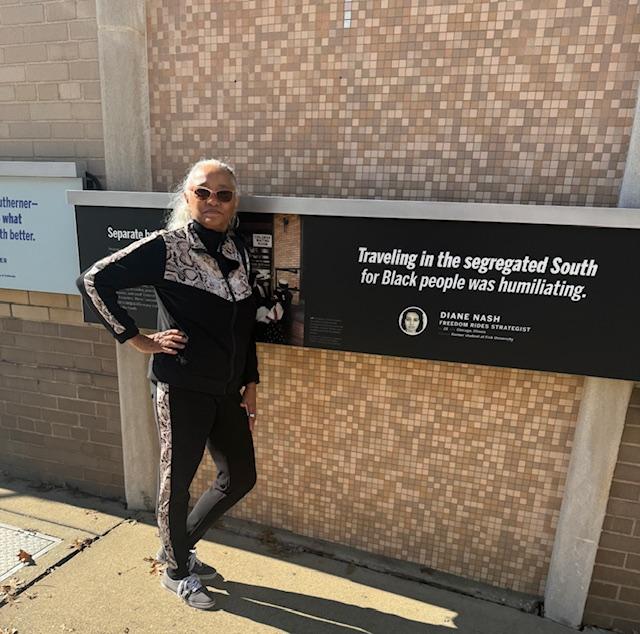
Our next stop was in Montgomery, Alabama, where we visited the Rosa Parks Museum, the Freedom Riders Museum, the Civil Rights Memorial Center, and Dexter Avenue King Memorial Baptist Church, Martin Luther King Jr.’s (MLK) first church assignment — along with his nearby parsonage.
Among the places visited, Montgomery’s Equal Justice Initiative three offerings had the most profound impact on me. These wondrous places included:
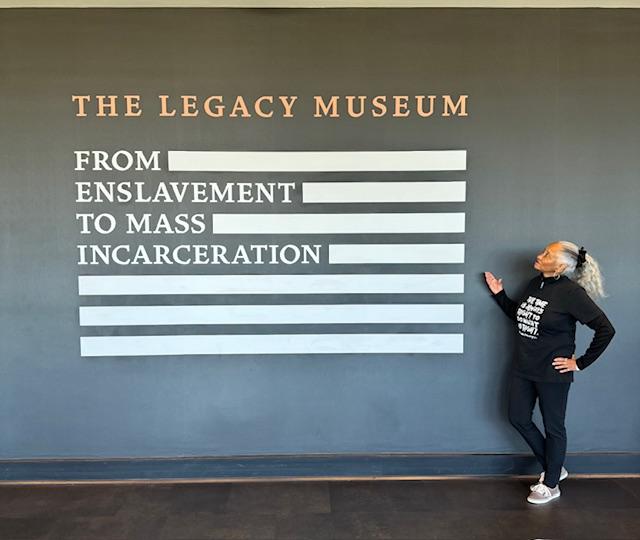
1. EJI’s Legacy Museum
This 11,000-square-foot, state-of-the-art museum is designed to strategically engage the visitor’s imagination, taking them from West Africa through the transatlantic slave trade, slave auctions, slavery itself, antebellum and postbellum, racial terrorism, the dehumanizing Jim Crow years, the Civil Rights Movement, and ends with the crisis of today’s mass incarceration.
2. The National Memorial for Peace and Justice
Set on a six-acre site, this is the nation’s first comprehensive memorial dedicated to the victims of racial terror. It uses sculpture, art, and design to contextualize the horror of widespread lynching and its legacy. More than 4,400 men, women, and children were lynched between 1877 and 1950 and their names are engraved on more than 800 steel monuments, one for each county where a lynching took place.
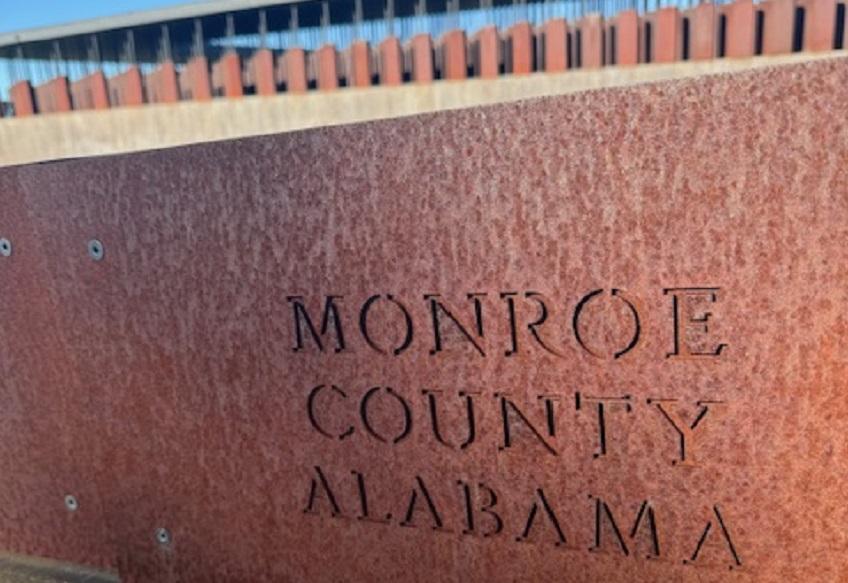
What made this exhibit especially challenging for me was visiting the section set aside for the counties of Alabama. My family hails from Monroe County, which had the third-highest number of lynchings of any county in the state. As I carefully read through the long list of victims. I wasn’t expecting to find my own family name. Twice.” I called my older brother to ask if we might be related, and was told that our grandfather, Horace Parker (1882–1964), had once told him that his uncle had been killed by the Klan. That explained a story my mother used to tell: how her father, Horace Parker, fearing racial terror, fled their Monroe County home one fateful and fretful night in 1917, when she was just five years of age. About a year later, he sent for the family to join him in the home he had created for them in Albion, Michigan. It was quite sad and remarkable to discover this link to my own family history.
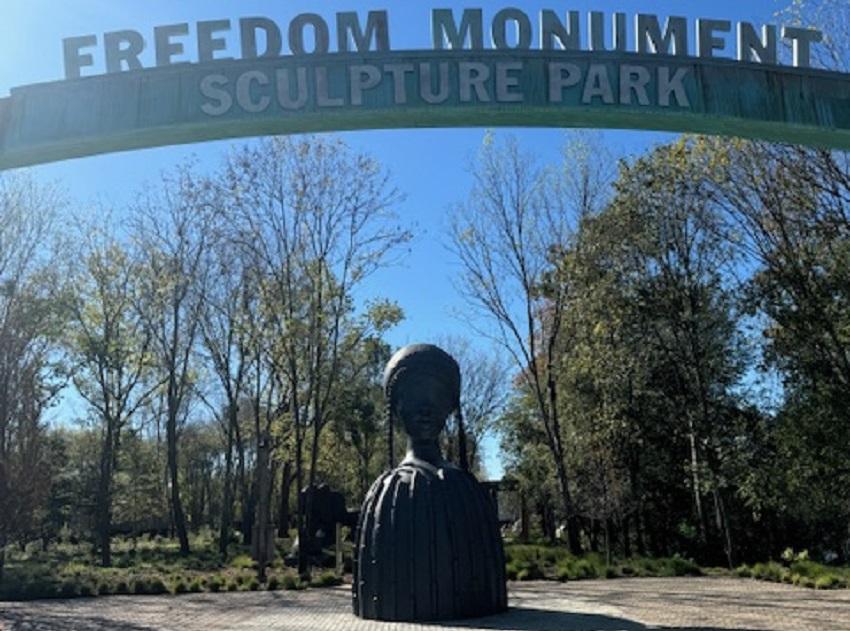
3. The Freedom Monument Sculpture Park
This seventeen-acre site brings history to life through sculpture, art and artifacts to offer a unique window into the lives of enslaved people, through the works of world-class artists including Kehinde Wiley, Simone Leigh, and Alison Saar, sister of renowned artist Betye Saar. The park’s location along the Alabama River — where tens of thousands of enslaved people were trafficked — honors their lives, courage, and resilience.
Selma
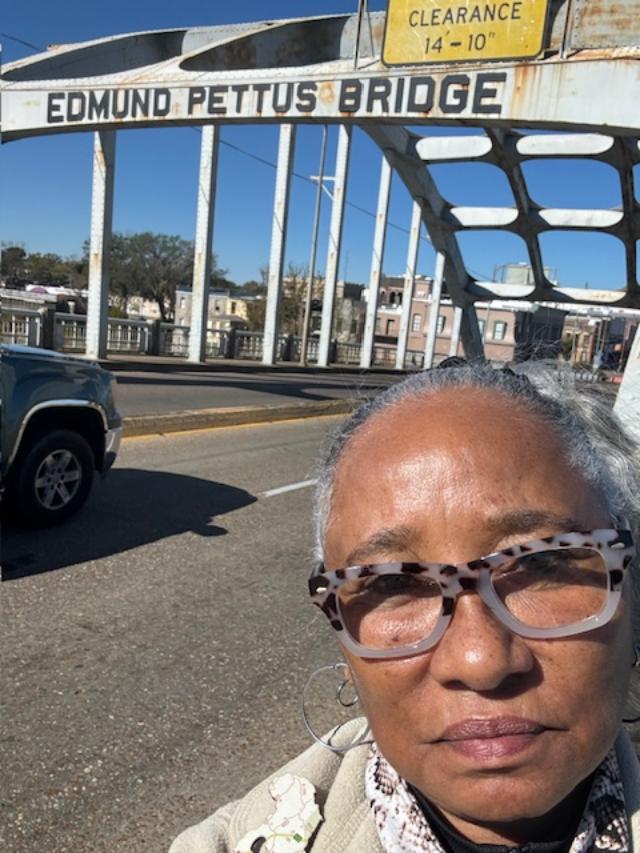
From Montgomery, we boarded a bus to Selma. The lecture, walking exploration, and guided bus ride were led by local historian and civil rights activist Dianne Harris. Ms. Harris shared her own experience of participating in the Bloody Sunday march on March 7, 1965, when 25-year-old activist John Lewis led a procession of approximately 600 people across the Edmund Pettus Bridge, on a 54-mile walk to the Montgomery State Capitol to demand voting rights for African Americans. It was there that they were met with brutal violence from state troopers. She provided us with a spellbinding account of fleeing the march to seek safety in a nearby church with troopers on horses in hot pursuit. She still has haunting memories of hearing the hoofs of the horses ascending the steps behind her.
Later we heard another first-hand account from march participant, Albert Southall, during a visit to his African American Literary Art Gallery and Museum.
Our last trek was the journey across the Edmund Pettus Bridge to visit the Civil Rights Memorial Park which is dedicated to the veterans of the movement.
Birmingham
The trip concluded in Birmingham with a visit to Kelly Ingram Park, where sculptures depict the attacks endured by child activists and protesters there on May 2, 1963, when more than 1,000 young people were beaten, hosed, attacked by dogs, and jailed for taking part in a peaceful demonstration.
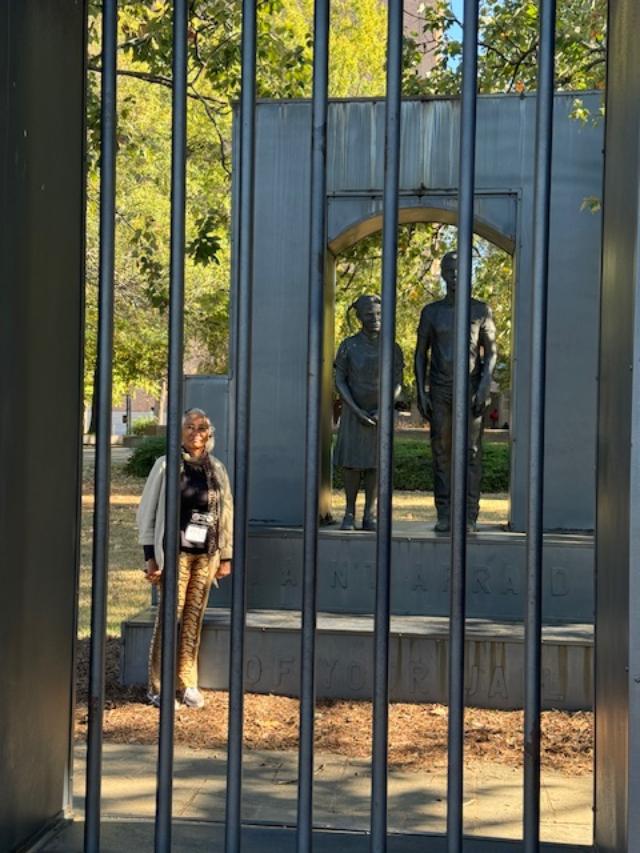
Across the street, at the 16th Street Baptist Church, we heard a spellbinding lecture from attorney Bill Baxley, who prosecuted two of the four Klansmen responsible for the 1963 bombing of that church that killed four young Black girls. He described how he unraveled the identities of the assailants and the ingenious legal strategies he used to bring them to justice — I was on the edge of my seat for his entire presentation.
Afterward, we visited the Birmingham Civil Rights Institute with the remarkable local historian Barry McNealy.
These kinds of first-hand accounts were both educational and emotional. Hearing stories like these from people who actually lived them brings history to life in a much more vivid and poignant way. And interactions like this will soon be impossible as that generation ages; it’s worth taking this trip sooner rather than later.
Family History
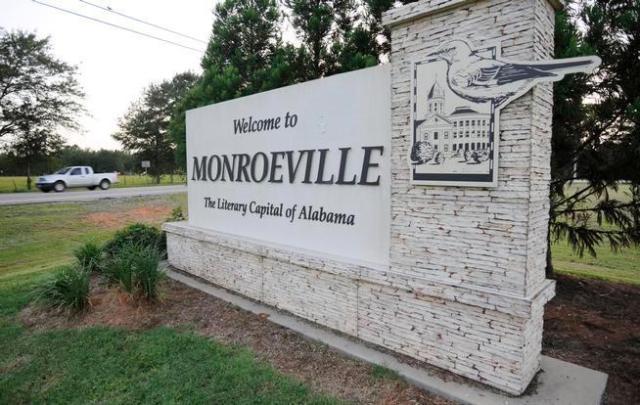
I mentioned my interest in genealogy to our Road Scholar Group Leader in Montgomery and she advised me to begin my search at the Alabama Department of Archives and History rather than waiting until I reached Monroeville, my ancestral homeland. (I’m glad I followed her advice, because when I got to Monroeville, the historical center was of no help at all.)
At the Department of Archives and History, I was assigned to a researcher who, after a few preliminary questions, unearthed a wealth of information about my family: the location of the land where my great-grandfather was born into slavery in 1863, details about his enslaver, the plantation, and even a map to help me find the site once I reached Monroeville. He located my great-grandfather’s death certificate — rich with information — along with the announcement of his 1926 probate proceeding for the land he came to own, and much more. The visit answered long-standing questions for my family and supplemented the genealogical work that my niece initiated on Ancestry.com.
After the conclusion of the Road Scholar Trail trip I made the three-hour drive to Monroeville. My last visit there was in 1961, when my mother and I traveled there during the Jim Crow era in search of information about her birthplace and any remaining family members. I still remember how startling it was to encounter America’s apartheid system firsthand — when I first saw a sign that said “colored water,” I actually thought the water itself would be colored, like a rainbow. I was very wrong.
Thanks to the map created by the Department of Archives and History researcher, I was able to visit the land where my ancestors had once worked as enslaved people, found my great-grandfather’s grave, and was able to place flowers on it. If you’d like to read more about that part of the journey, see the October edition of Oldster Magazine.
Beyond the Trail: Don’t Miss Africatown
I ended my trip with a visit to Africatown in Mobile, Alabama. Though Mobile isn’t officially part of the Civil Rights Trail, I found its African American Heritage Trail and the Africatown Heritage House to be fascinating and deeply informative. Africatown was founded around 1865 by a group of 32 West Africans who, in 1860, had been among the last people illegally trafficked into the United States as slaves. The Heritage House chronicles their journey from Africa to Africatown.
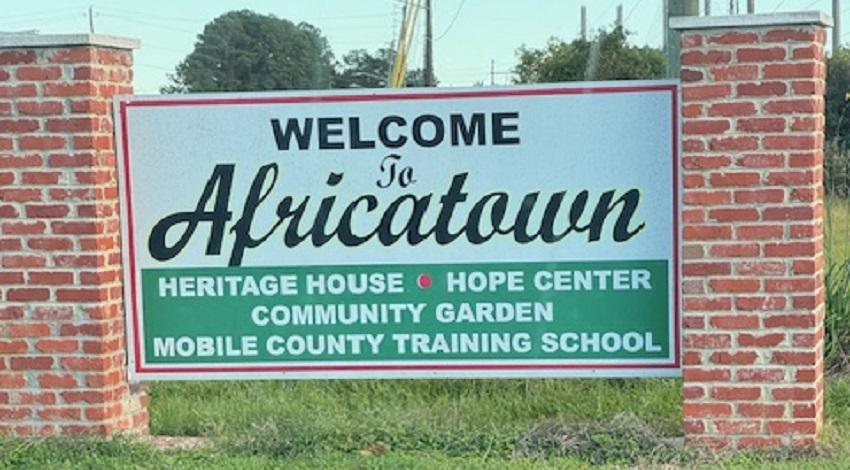
On May 22, 2019, the Alabama Historical Commission and its partners announced that the ship that had carried them, the Clotilda, had been located on the bottom of the Mobile River. Following extensive archaeological and structural analysis, experts determined that the wreck is too fragile to be safely raised, and it will instead be preserved in place as an underwater memorial.
Africatown Hall is now home to the Africatown Redevelopment Corporation, which is working to revitalize the neighborhood, beginning with the renovation of homes throughout the community. I highly recommend this addition to your own heritage journey to Alabama, as it brought even more context and closure to mine.
Conclusion
This pilgrimage to the Civil Rights Trail gave me more than knowledge of history — it gave me a portion of my own family’s history back. Sixty years after I stood on the same ground as a nine-year-old girl bewildered by “colored” water, I stood there again as a woman who could finally read her great-grandfather’s name on a document, and her ancestors’ names on a monument. That is the gift of the Civil Rights Trail: it doesn’t just teach you what happened. For those of us whose families lived it, it can hand you back a piece of who you are.
I am deeply grateful that Road Scholar has created such an important and life-changing journey along the Civil Rights Trail. It is, in every sense, a roadmap — not just to a better country, but to a fuller understanding of ourselves.
“What fascinates me most about history is how it helps make sense of the present…Becoming aware of it can then empower us to be more than passive, unwitting participants in events as they unfold around us. It’s one thing to read about history in a book and quite another to find yourself physically present in a space where a certain event occurred, where the walls around you and the land beneath our feet bear witness to what happened and hold palpable energy that propels you forward toward a greater understanding of your place in time.” Bree Newsome Bass, women who, in 2015, scaled the flagpole in front of South Carolina’s State Capitol in Columbia to lower the Confederate flag.
A note: Before this trip, I was advised to read “My Grandmother’s Hands: Racialized Trauma and the Pathway to Mending Our Hearts and Bodies” by therapist Resmaa Menakem. It helped prepare me emotionally for the trip so that I would not get re-traumatized by witnessing and reliving the challenges of our collective past. I highly recommend other African Americans visiting the Civil Rights Trail do the same.
Elaine Lee is an attorney practicing in the San Francisco Bay Area. She is also a freelance travel journalist and editor of “Go Girl: The Black Women’s Book of Travel and Adventure” as well as its sequel “Go Girl 2.” To learn more about her work, visit https://www.ugogurl.com/ and/or elaineleeattorney.com.


